

Train travel in Turkey can feel surprisingly simple in 2026. You can cross big distances on modern high-speed trains (YHT). Or, you can slow down on scenic mainline routes. Either way, you get a practical option for moving around the country with less stress than driving.
1) What kinds of trains exist in Turkey?
Turkey mainly offers two categories of intercity trains:

- High-speed trains (YHT): fast links between major hubs like Istanbul, Ankara, Eskişehir, Konya, Karaman, and Sivas.
- Mainline & express trains: slower, often scenic routes connecting regions like the Aegean, Central Anatolia, Eastern Anatolia, and parts of the Mediterranean and Southeast.
If you want comfort and speed, pick YHT. If you want landscapes and local life, pick a classic express.
2) How to buy train tickets in Turkey in 2026
Buy online (recommended)
Most travelers buy tickets online through the official TCDD Taşımacılık e-ticket system and its mobile app. You typically need to enter passenger details and carry an ID document (passport or national ID) for the trip. For your train travel in Turkey you can book your ticket with this link.
Buy at the station
You can also buy tickets at major stations at ticket counters or machines. This can work well for short routes. However, popular departures can sell out.
Book early for high-speed routes
High-speed trains are popular. Tickets often go on sale shortly before departure (commonly around two weeks). So book as soon as your dates look stable, especially on weekends and holidays.
3) Where to catch the train (the stations that matter)
Istanbul has multiple departure points depending on the line. In practice, you will see major YHT departures tied to stations such as Halkalı, Bakırköy, Söğütlüçeşme, and Pendik, with intermediate stops on the way toward Ankara.
Ankara is the main rail hub. It connects to many YHT and classic lines. Konya, Eskişehir, İzmir (Basmane), Adana, and Kars also act as key gateways for their regions.
4) How long does it take? Realistic travel times (2026)
Here are practical reference times for the most-used high-speed routes:
| Route (YHT) | Typical travel time | Notes |
|---|---|---|
| Ankara → Istanbul | ~4h30 to 5h | Stops can include Eskişehir, İzmit, and others. |
| Ankara → Eskişehir | ~1h26 | Very convenient for day trips. |
| Ankara → Konya | ~1h49 | Great for linking Ankara with Central Anatolia. |
| Ankara → Karaman | ~2h49 | Useful if you continue toward the Mediterranean by other transport. |
| İstanbul → Konya | ~5h | Direct high-speed service on many dates. |
| Eskişehir → Istanbul | ~3h | Popular for students and weekend travel. |
If you want a “bucket-list” journey, the classic long-distance route toward Kars is famous. The Ankara–Kars service is often described as a full-day trip, around 33 hours end-to-end depending on the train and season.
5) How much does it cost in 2026?
Prices change. Season matters too. Still, it helps to have realistic ranges.
High-speed (YHT): updated 2026 examples
In mid-January 2026, several YHT fares increased (widely reported around a ~19% adjustment). Use these as reference points and always re-check on the official booking screen before paying.
| YHT route | Example fare (TL) |
|---|---|
| Ankara ↔ Istanbul | ~930 TL |
| Ankara ↔ Konya | ~430 TL |
| Ankara ↔ Eskişehir | ~480 TL |
| Eskişehir ↔ Istanbul | ~600 TL |
| Eskişehir ↔ Konya | ~665 TL |
Mainline trains: cheaper seats, optional sleepers
On classic long routes, you often choose between standard seats (pulman) and sleeper/couchette options on certain trains. As an example, published 2026 lists for the İzmir Mavi Train show a standard seat around 910 TL and sleeper options around 2,475 TL (route and class dependent). Treat this as a ballpark. Prices can vary by train, date, and availability.
6) Which regions can you reach by train in Turkey?
You can cover a lot of Turkey by rail. But you should think in “rail corridors,” not in every single destination.
Marmara (Istanbul region) and the Ankara corridor
You can travel by train between Istanbul and Ankara, with stops around the Marmara industrial belt (examples include İzmit/Arifiye-style stops on some services). This is the country’s most-used passenger rail axis.
Central Anatolia
Ankara, Eskişehir, Konya, Karaman, and Sivas form a strong rail core thanks to YHT services and connecting mainline trains.
Aegean region
You can reach İzmir (Basmane) on major mainline services such as the İzmir Mavi, Konya Mavi, and other Aegean-focused lines. This helps for cities like Manisa and for connections toward Denizli (gateway for Pamukkale) on specific services.
Mediterranean gateways (rail + short transfers)
Rail corridors reach key hubs like Adana. You also have named lines that connect inland cities to the south (for example, Konya–Adana services on some routes). From these hubs, you can continue by bus or transfer. This matters because some coastal resort areas do not have direct intercity passenger rail.
Eastern Anatolia and the “legendary” Kars direction
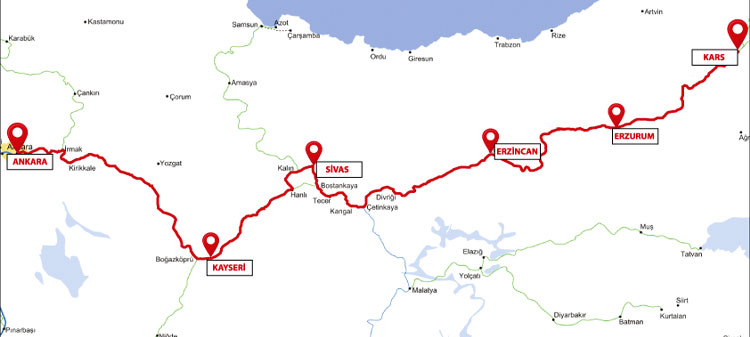
The Ankara → Kars route (often discussed via Doğu Express / touristic variants) opens up Eastern landscapes and winter travel. Many travelers build a rail trip around Erzurum and Kars.
Southeast (long-distance express corridors)
Some long-distance services connect toward the southeast (often referenced under “Kurtalan Express” style routes). This is slower. But it can be meaningful if you want a deep overland itinerary instead of flying.
Check here our article about the 3 best regions to visit in Turkey
7) What’s new in 2026? Practical “current” context
Two things matter most for travelers in 2026:
- Fares changed in January 2026 on key YHT routes. So do not rely on old blog posts or old screenshots. Always confirm the final price in the booking step.
- High-speed demand keeps rising. That means popular departures sell out. Book early when your dates are fixed, especially on holiday weeks.
Also, remember that engineering works can adjust timetables and trip duration on certain corridors. So you should always check the day-of schedule before you plan tight connections.
8) Quick tips to make your train trip smoother
- Arrive early, especially for YHT. Stations can have checks and busy entrances.
- Carry your ID (passport for most visitors). Ticket checks can require it.
- Pick the right comfort level: economy vs business on YHT, and sleeper/couchette on certain night trains.
- Use rail for hubs, then connect by bus/taxi for places without direct rail access (many coastal or small tourism spots).
Bottom line: In 2026, Train Travel in Turkey is a good alternative for fast city-to-city jumps (YHT) and for slower scenic routes (mainline expresses). Build your itinerary around rail hubs like Istanbul, Ankara, Konya, Eskişehir, İzmir, Adana, Sivas, and Kars. Then connect outward for the final stretch
